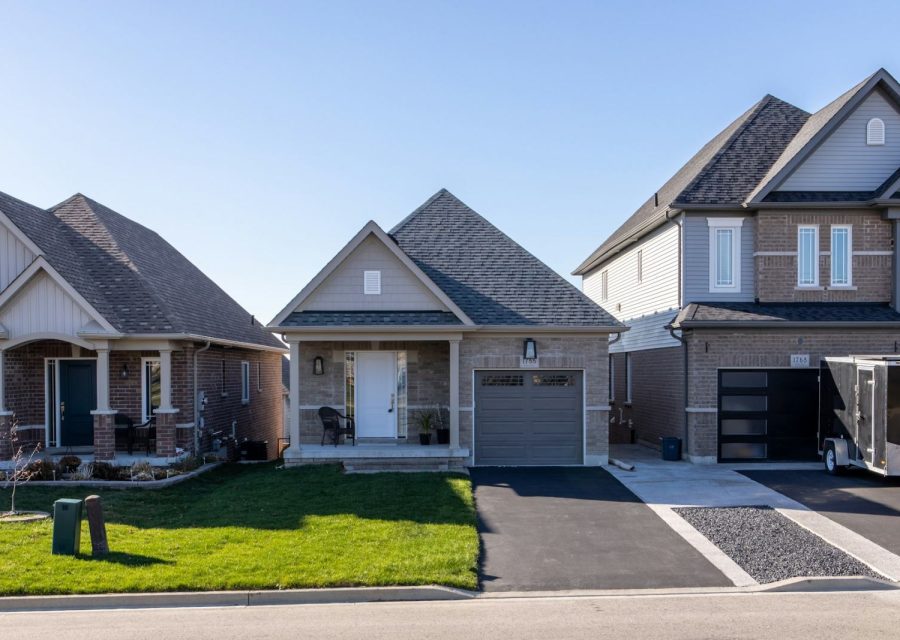

Selling a house in Vaughan, Ontario costs the seller the real estate commission plus 13 per cent HST on that commission, legal fees and disbursements, any mortgage payout charges, and the cost of preparing the home and moving out. Sellers in Ontario do not pay land transfer tax; the buyer does. Whether you owe income tax on the sale depends mainly on whether the home was your principal residence.
Most cost guides online quote American figures that do not apply here. What follows is the Ontario version, line by line, for sellers in Vaughan.
How much is real estate commission in Ontario?
There is no standard rate. Commission is negotiated between you and the brokerage and written into the listing agreement. The Real Estate Council of Ontario states plainly that the amount is not fixed or approved by RECO, by any government authority or by any real estate board.
The agreement can set a fixed dollar amount, a percentage of the sale price, or a combination of both. It must also set out how the brokerage’s pay is calculated, including any amount you agree to offer a buyer’s brokerage. It is usually the largest single cost of selling, so read that section closely.
Do you pay HST on real estate commission?
Yes. Real estate services are taxable, and the HST rate in Ontario is 13 per cent. It is charged on the commission, so when you compare proposals from brokerages, compare the figure after HST.
What do legal fees cover when you sell?
Every Ontario sale closes through a real estate lawyer. Fees vary by firm and by how complicated the file is, so ask for a written quote that separates the lawyer’s fee from disbursements. On a typical sale, the seller’s lawyer will:
- review the agreement of purchase and sale, its conditions and any amendments
- request a payout statement from your lender and arrange for the mortgage to be paid off and discharged from title
- prepare the statement of adjustments, which credits or charges you for prepaid property tax, utilities and, for condos, common expenses
- sign the transfer and closing documents with you and coordinate with the buyer’s lawyer
- receive the sale proceeds, pay out the mortgage and commission, and send you the balance
Disbursements are the out-of-pocket costs the lawyer passes on to you, such as registration and search charges. They are billed separately from the fee, so make sure both appear on the quote.
What does it cost to pay off a mortgage early?
If your mortgage term ends on or before closing, there is usually no prepayment charge. If you sell mid-term, paying the balance off counts as a prepayment. According to the Financial Consumer Agency of Canada, the penalty is usually the higher of three months’ interest on what you owe or the interest rate differential, and lenders usually use the interest rate differential when your rate is higher than the current rate and you signed less than five years ago.
Ask your lender for a payout statement well before closing, not in the final week. Ask whether you can port the mortgage to your next home, which can avoid breaking the contract. The payout statement will also show any fee your lender charges to discharge the mortgage.
Selling a condo: what does a status certificate cost?
A status certificate sets out the condo corporation’s finances, its reserve fund, any special assessments and whether the unit’s common expenses are paid up. Many sellers order one before listing so it is ready when an offer arrives.
Ontario caps the fee. Under the regulations to the Condominium Act, 1998, a corporation can charge up to $100, including all taxes, for a certificate delivered within 10 days. A corporation may offer faster delivery for a rush fee, but it must offer the $100 option.
Staging, repairs and cleaning
These are the costs most within your control. A thorough clean and fixing obvious small defects are close to essential; staging or new flooring depend on the house. Our guide to preparing your home for sale lists the work that tends to pay for itself and the work that usually does not.
Moving and carrying costs
Budget for movers, storage if there is a gap between homes, and utility transfers. If your sale and purchase close on different days, you may carry two homes for a period or need bridge financing, which your lender prices separately.
Do you pay tax when you sell a house in Ontario?
Not land transfer tax. In Ontario it is paid by the buyer on closing, so it does not appear on the seller’s side. Our guide to closing costs in Ontario covers it from the buyer’s side.
Income tax is a separate question:
- Principal residence. If the home was solely your principal residence for every year you owned it, the gain is generally not taxed. You still have to report the sale and designate the property on your tax return; the Canada Revenue Agency only allows the exemption if you report the sale and the designation.
- Investment and secondary properties. Selling a rental, a cottage or another property that was not your principal residence for every year you owned it generally produces a capital gain, part of which is taxable. Selling with a tenant in place adds its own steps; see selling a tenanted property in Ontario.
- Short ownership. Under the federal residential property flipping rule, a gain on a home owned for less than 365 consecutive days is generally treated as business income rather than a capital gain, unless one of the life events listed by the CRA applies, such as a death in the family or a related person joining the household.
What if the seller is not a resident of Canada?
Non-resident sellers have an extra step under section 116 of the Income Tax Act. The seller must notify the CRA of the sale, no later than 10 days after it, and obtain a certificate of compliance, often called a clearance certificate. Without one, the buyer is entitled to withhold 25 per cent of the proceeds, less any certificate limit, or 50 per cent for certain types of property, and can become liable for the seller’s tax. Expect the buyer’s lawyer to hold back funds until the certificate arrives, and start the process early.
All of this is general information. Tax treatment depends on your own facts, so confirm it with your accountant or lawyer before you list.
Putting a number on it
A useful estimate starts with a realistic sale price, then subtracts commission and HST, legal fees and disbursements, the mortgage payout including any penalty, preparation and moving costs, and any tax you expect to owe. Our team lead is a CPA, CA, and we build these estimates the way an accountant would: line by line, with every assumption written down. We do not give tax advice, but we can show you where each number comes from.
If you are weighing a sale, a home evaluation is the first input. You can start with a home evaluation on our Vaughan selling page, and we will walk through the full estimate with you.
Thinking about a move? Get a request a home evaluation, browse our listings or talk to the team.